
A supercomputer is an ultra-high-performance computing system designed to solve complex scientific, engineering, and data-intensive problems far beyond the capabilities of conventional computers. Operating at speeds measured in petaflops (quadrillions of calculations per second) or even exaflops (quintillions), these machines represent the pinnacle of computational power. Unlike everyday laptops or servers, supercomputers leverage massive parallelism, combining thousands or millions of processors working in tandem, interconnected by advanced networks to achieve unprecedented processing throughput.

A database is a structured system designed to store, organize, and manage vast amounts of digital information efficiently. Serving as the backbone of nearly every digital application, databases enable users and systems to retrieve, update, and analyze data with speed, accuracy, and security. From powering e-commerce platforms to managing healthcare records, databases are indispensable in today’s data-driven world.
At their core, databases rely on a Database Management System (DBMS), software that interacts with users, applications, and the database itself to handle data operations. The most common type is the relational database (e.g., MySQL, PostgreSQL), which organizes data into tables with rows and columns, linked by unique keys. SQL (Structured Query Language) is used to query and manipulate relational data. In contrast, NoSQL databases (e.g., MongoDB, Cassandra) prioritize flexibility, handling unstructured or semi-structured data like JSON documents, graphs, or time-series data, ideal for big data and real-time applications. Newer models like NewSQL blend relational consistency with NoSQL scalability, while in-memory databases (e.g., Redis) accelerate performance by storing data in RAM.
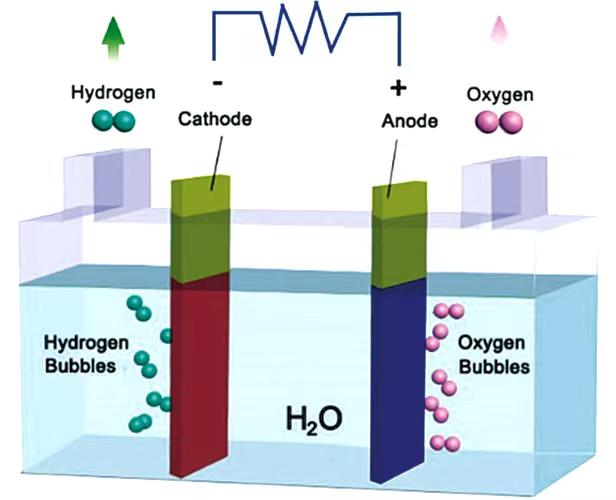
Hydrogen evolution reaction (HER) catalysts are critical for efficient water splitting in renewable energy systems. Recent advancements focus on reducing reliance on platinum-group metals (PGMs) while enhancing activity and durability. For instance, iridium metallene with carbon intercalation, engineered via biaxial strain tuning, exhibits exceptional HER performance due to lattice contraction-induced d-band center shifts, achieving a mass activity of 2.89 A mg⁻¹Ir (3.6× higher than Pt/C) and stability over 5000 cycles15. Fluoride pre-catalysts, like Co(OH)₂ derivatives, undergo rapid structural reconstruction in alkaline electrolytes, achieving an overpotential of 54 mV at 10 mA cm⁻², outperforming Pt/C3. Ultra-fine PtRu nanoalloys grafted with amorphous PtₓRuᵧSez "skins" demonstrate record stability in acidic media (1000 hours at −10 mA cm⁻²) and a mass activity of 26.7 A mg⁻¹Pt+Ru, attributed to optimized intermediate adsorption and corrosion resistance7. Non-noble alternatives, such as dealloyed TiCuRu alloys, also show promise with a low η₁₀ of 35 mV in alkaline conditions, leveraging Ru-enhanced water dissociation kinetics9.
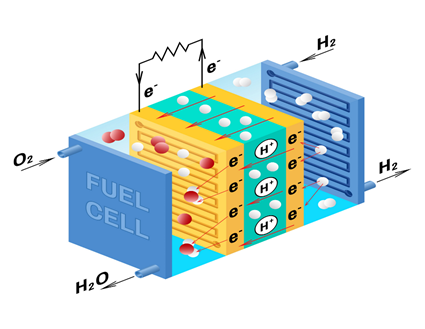
Oxygen reduction reaction (ORR) catalysts are vital for fuel cells and metal-air batteries. Atomically dispersed Fe-N-C catalysts with dynamic Fe-S bond modulation exhibit superior ORR activity by optimizing intermediate adsorption-desorption behavior, achieving high stability and intrinsic activity in alkaline media2. Dual MOF-derived Fe/N/P-tridoped carbon nanotubes, synthesized via a simplified one-step pyrolysis, offer abundant active sites and enhanced charge transfer, making them cost-effective alternatives to Pt/C in zinc-air batteries48. Surface-engineered PtFe nanowires with intermetallic ordering demonstrate remarkable durability in proton exchange membrane fuel cells (PEMFCs), reducing Fe dissolution by 50% while maintaining high activity through atomic-level surface stabilization6. Additionally, 3D N/P/S-tridoped carbon nanoflowers with branched nanotubes exhibit bifunctional ORR/OER capabilities, enabling rechargeable Zn-air batteries with a peak power density of 187 mW cm⁻² and 280-hour cyclability10. These innovations highlight the role of strain engineering, atomic coordination control, and nanostructural design in advancing ORR catalysis.